





Menu

No Hot Water Diagnosis in Nashville | Expert Troubleshooting That Identifies the Real Problem Fast

Ironwood Plumbing Nashville uses systematic diagnostic testing to pinpoint why your water heater failed, whether it's a faulty thermostat, sediment buildup, or a failed heating element, so you get the right repair the first time.

Slider Image 1
Slider Image 2
Slider Image 3
Slider Image 4
Slider Image 5
Slider Image 7
Slider Image 8
Slider Image 9
Slider Image 10
Slider Image 11

Why Your Nashville Water Heater Suddenly Stopped Producing Hot Water

You turned on the shower expecting hot water, and all you got was cold. The frustration is immediate. Now you're standing there wondering if you need a costly replacement or if something simple went wrong.

Nashville's hard water creates unique challenges for water heaters. The high mineral content in our municipal supply accelerates sediment accumulation inside tanks. When calcium and magnesium settle at the bottom of your water heater, they form a barrier between the heating element and the water itself. This insulating layer forces your system to work harder while producing less heat.

Most homeowners in East Nashville and Green Hills experience this sediment problem within three to five years of installation. The minerals don't just reduce efficiency. They cause premature failure of heating elements, corrode anode rods faster, and create pressure buildup that can crack tank linings.

When you lose hot water suddenly, the cause often traces back to one of five specific failures. A tripped circuit breaker or blown fuse cuts power to electric units. A failed thermostat prevents temperature regulation. Burned-out heating elements stop heat transfer entirely. Gas units lose hot water when pilot lights extinguish or gas valves malfunction. Sediment buildup at the tank bottom creates a false reading that tricks thermostats into shutting off prematurely.

Trying to troubleshoot water heater problems without proper testing equipment wastes time and money. You can't diagnose lack of hot water by guessing. You need voltage testing, continuity checks, and temperature verification to identify water heater issues accurately. The causes of no hot water vary dramatically between gas and electric systems, and water heater malfunction symptoms often point to multiple simultaneous failures.

Why Your Nashville Water Heater Suddenly Stopped Producing Hot Water
How We Diagnose Water Heater Failures Using Multi-Point Testing

How We Diagnose Water Heater Failures Using Multi-Point Testing

When you call Ironwood Plumbing Nashville for no hot water, we arrive with diagnostic tools that identify the exact component failure. We don't guess. We test.

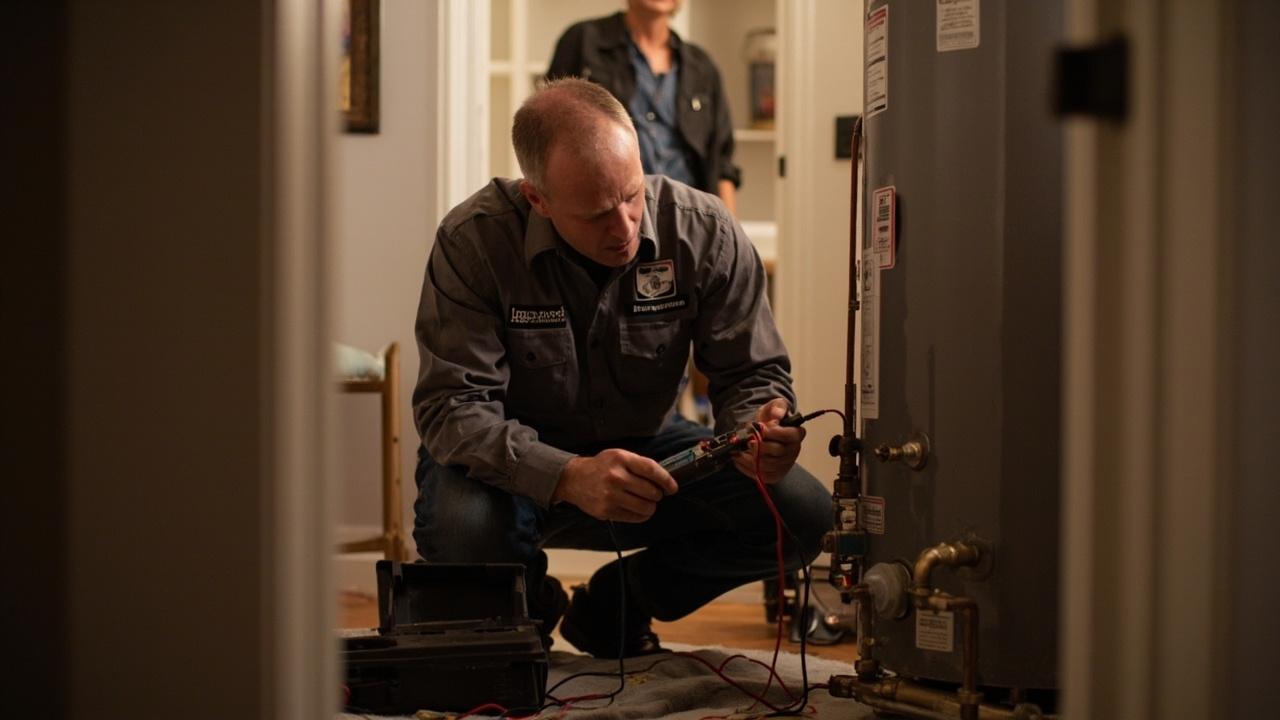
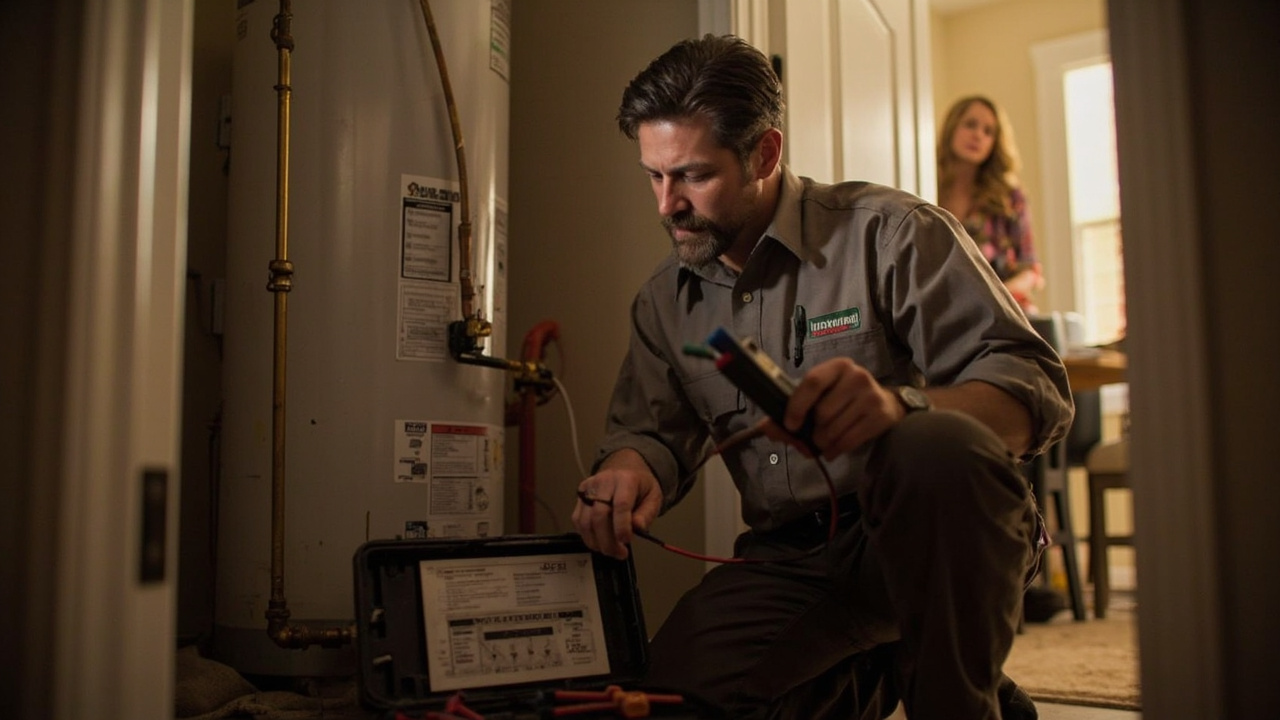
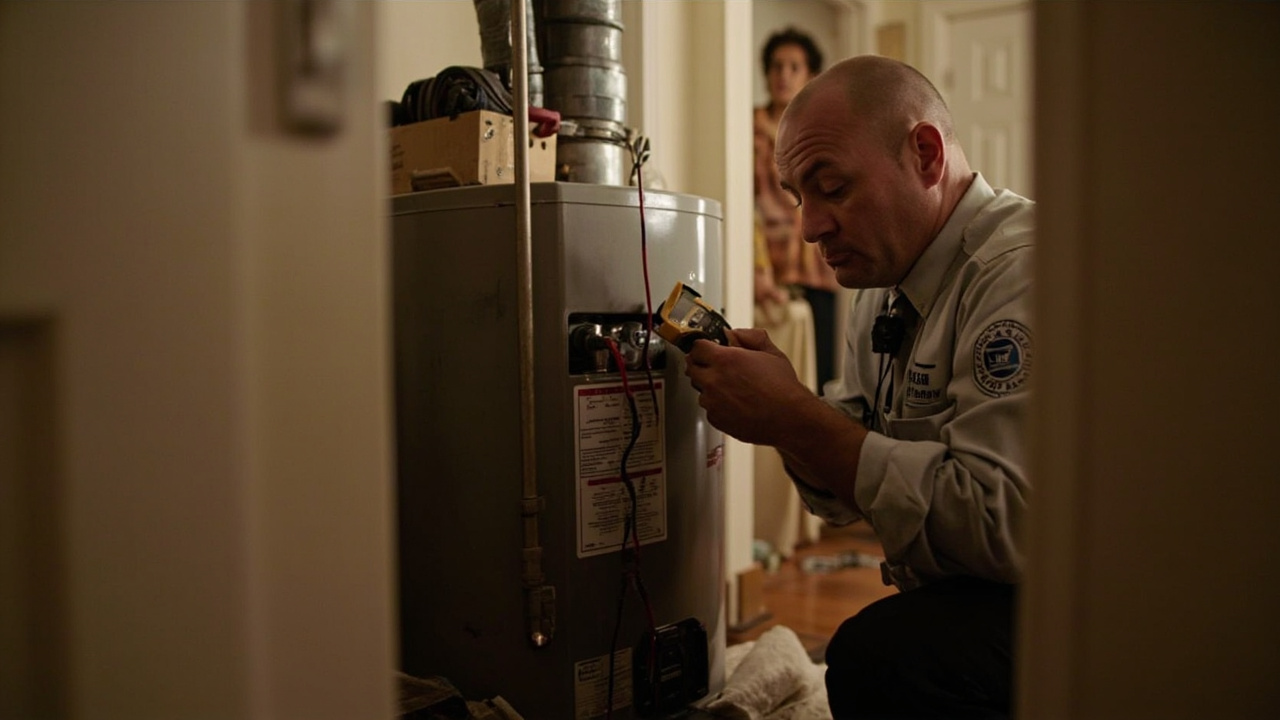
Our technicians start with electrical testing on electric units. We use a multimeter to check voltage at the breaker, then at the water heater's junction box, then at each heating element. This sequential testing reveals whether you have a power supply issue, a wiring fault, or an element failure. Each heating element should show continuity when tested. If the reading shows infinite resistance, the element is open and needs replacement.

For thermostat diagnosis, we verify calibration by testing the actual water temperature against the thermostat setting. A working thermostat should shut off power to elements when water reaches the set temperature. If the thermostat fails to trip at the correct temperature, it's defective.

Gas water heater diagnosis requires different tools. We check gas supply pressure at the valve using a manometer. Low pressure indicates a supply issue before the water heater. We inspect the thermocouple with a millivolt meter. This safety device generates a small electrical current when heated by the pilot flame. If the thermocouple output falls below 20 millivolts, it will shut off gas flow even when the pilot is lit.

We drain a sample from the tank bottom to check sediment levels. Excessive sediment appears as gritty, discolored water. This visual confirmation tells us whether flushing will restore function or if damage already occurred.

Anode rod inspection reveals internal tank condition. These sacrificial rods corrode instead of the tank itself. When an anode rod is completely dissolved, your tank is next. We pull the rod and measure remaining diameter to predict tank lifespan.

This systematic approach identifies every failure point. You get a complete diagnosis, not a guessing game.

What Happens During Your Water Heater Diagnostic Appointment

No Hot Water Diagnosis in Nashville | Expert Troubleshooting That Identifies the Real Problem Fast
01

Initial System Assessment

Our technician arrives and asks specific questions about when you lost hot water, whether it was sudden or gradual, and if you've noticed any unusual sounds or smells. We check your water heater's age, fuel type, and capacity. This information shapes our diagnostic approach. We verify the power supply is active and check for visible leaks, corrosion, or damage around the unit before beginning detailed testing.
02

Component Testing and Measurement

We perform electrical testing with a multimeter on elements and thermostats. Gas units get thermocouple output measurement and burner assembly inspection. We drain a sample to evaluate sediment levels and test water temperature at multiple taps throughout your home. This comprehensive testing identifies the exact component failure. We document voltage readings, resistance measurements, and temperature differentials so you understand precisely what failed and why it happened.
03

Diagnosis Report and Repair Options

After testing, you receive a clear explanation of what failed and what needs replacement or repair. We provide repair options with transparent information about parts, labor, and expected outcomes. If multiple components failed, we explain the most cost-effective approach. When repairs exceed 50 percent of replacement cost, we discuss whether a new water heater makes better financial sense. You decide the next step with complete information.

Why Nashville Homeowners Trust Ironwood Plumbing for Accurate Water Heater Diagnosis

You need a plumber who understands Nashville's specific water conditions and how they affect your equipment. Our technicians work with the same hard water issues every day across neighborhoods from Sylvan Park to Hermitage. We've diagnosed hundreds of water heaters compromised by mineral buildup unique to our municipal supply.

Experience with local water chemistry matters because it shapes how we interpret diagnostic results. When we pull a heating element covered in white scale, we know that's normal Nashville sediment, not a rare problem. We understand which brands and models hold up better in our water conditions. This local knowledge prevents misdiagnosis.

We invest in proper diagnostic tools because guessing costs you money. Our technicians carry digital multimeters, temperature guns, manometers, and anode rod sockets. Many plumbers show up with a wrench and a hunch. We show up with equipment that provides measurable data.

When we diagnose your water heater, you get documentation. We write down voltage readings, element resistance, and thermostat calibration results. This information helps you understand exactly what failed. It also provides baseline data if problems recur.

Our diagnostic approach follows a logical sequence that eliminates variables. We test from the power source to the endpoint, which prevents wasted effort replacing parts that aren't actually broken. Some plumbers replace thermostats and elements as a precaution. We replace only confirmed failures.

You also get honest assessment about repair value. When a water heater is 12 years old with a failed element, a corroded anode rod, and heavy sediment, we tell you that repair might not be worth the investment. A new element might last six months before another component fails. We provide the information you need to make smart financial decisions.

Ironwood Plumbing Nashville operates on accuracy, not assumptions. You deserve to know what's actually wrong before spending money on repairs.

What to Expect When We Diagnose Your Water Heater Problem

Same-Day Diagnostic Appointments Available

We understand that losing hot water disrupts your entire household. You can't shower, wash dishes, or do laundry effectively. That's why we offer same-day diagnostic appointments for Nashville residents facing water heater failures. Our technicians arrive within a scheduled two-hour window and complete most diagnostics within 45 to 90 minutes. For urgent situations where you need immediate answers, we prioritize your call. Once we identify the problem, we discuss whether we can complete repairs the same day or if we need to order specific parts. You get answers fast so you can plan your next steps.

Comprehensive Testing With Detailed Explanation

Our diagnostic process examines every component that affects hot water production. We test electrical circuits, heating elements, thermostats, pressure relief valves, dip tubes, and anode rods on electric units. Gas water heaters get burner assembly inspection, thermocouple testing, gas valve evaluation, and venting system checks. We drain the tank to assess sediment levels and check for internal corrosion. After testing, our technician explains what we found in plain language. You see the failed component, understand why it stopped working, and learn what repair or replacement involves. We answer your questions until you feel confident about the diagnosis.

Clear Repair Options With Transparent Pricing

Once we identify the failure, you receive clear repair options with upfront pricing. We explain the cost of parts and labor before starting any work. If you need a heating element replacement, we tell you the price and how long it takes. If your water heater needs multiple repairs, we help you evaluate whether fixing it makes financial sense compared to replacement. We never pressure you toward the most expensive option. Our job is to give you accurate information so you can make the right choice for your situation and budget. You approve all work before we begin.

Follow-Up Support and Prevention Guidance

After we complete your water heater diagnosis and any necessary repairs, we provide guidance on preventing future failures. For Nashville's hard water conditions, we recommend annual tank flushing to remove sediment before it causes damage. We explain how to test your temperature and pressure relief valve quarterly. If your water heater is approaching the end of its expected lifespan, we discuss replacement timing so you can plan ahead instead of facing an emergency. We're available for follow-up questions if your hot water issues return or if you notice new symptoms. Our goal is keeping your system running reliably, not just fixing today's problem.

Frequently Asked Questions

You Have Questions,
We Have Answers

What is the most common cause of no hot water? +

A failed heating element is the most common cause for electric water heaters, while a malfunctioning pilot light or gas valve typically affects gas units. In Nashville, sediment buildup from our hard water accelerates element failure. The minerals in Middle Tennessee water create crusty deposits that insulate heating elements, forcing them to work harder until they burn out. Tripped circuit breakers and faulty thermostats also rank high. If you lose hot water suddenly, check your breaker panel first. If it's not tripped, you need professional diagnosis to identify the specific component failure.

How to diagnose no hot water? +

Start by checking your circuit breaker or pilot light, depending on your water heater type. For electric units, confirm power is reaching the unit and test voltage at the heating elements with a multimeter. For gas heaters, verify the pilot stays lit and flames burn blue. Check your thermostat settings (120-140 degrees is standard). Look for water pooling beneath the tank, which signals leaks. Listen for unusual sounds like popping or hissing. Nashville's mineral-heavy water often causes sediment buildup that you can hear rattling. If basic checks don't reveal the problem, professional testing equipment identifies thermostat, element, or gas valve failures.

What would cause hot water to not work? +

Several failures stop hot water production. Electric water heaters fail when heating elements burn out, thermostats malfunction, or high-limit switches trip due to overheating. Gas units lose hot water when pilot lights extinguish, gas valves fail, or thermocouples wear out. Tripped breakers cut power to electric heaters. Sediment accumulation, especially common in Nashville due to our limestone-rich water supply, buries heating elements and reduces efficiency until they fail completely. A broken dip tube sends cold water directly to your hot outlet. Age matters too. Units over 10 years old experience more component failures and reduced heating capacity.

Why have I suddenly got no hot water? +

Sudden hot water loss typically means a component just failed or your breaker tripped. For electric heaters, a heating element burning out is the most likely culprit, particularly in Nashville where hard water shortens element lifespan. Gas heaters lose hot water when pilot lights blow out or gas valves fail. A tripped high-limit switch, designed to prevent overheating, can shut your system down after a power surge, which happens during our frequent spring and summer thunderstorms. Heavy household water usage can also deplete your tank faster than it reheats, though this resolves within an hour once demand decreases.

Is no hot water a plumbing emergency? +

No hot water alone is not a plumbing emergency, but related symptoms might be. If you smell gas near your water heater, evacuate immediately and call your gas company. Water pooling around your tank signals an active leak that can cause flooding and water damage, requiring urgent attention. Electrical sparking or burning smells indicate fire hazards needing immediate professional response. In Nashville winters, losing hot water is uncomfortable but rarely dangerous. That said, elderly residents and families with infants should prioritize quick repairs. Most situations allow you to schedule same-day or next-day service rather than after-hours emergency calls.

How to reset a hot water system? +

For electric water heaters, locate your circuit breaker panel and flip the water heater breaker off, wait 30 seconds, then flip it back on. This resets the high-limit switch that may have tripped. For gas units, turn the gas control valve to the off position, wait five minutes for gas to clear, then relight the pilot following manufacturer instructions on the tank label. If you smell gas, do not attempt to reset anything. Some Nashville homes have older units without clear reset instructions. If your heater doesn't respond after a basic reset, the thermostat or heating element likely failed and needs replacement.

Why does my cold water work but not my hot water? +

This specific symptom points to a problem isolated to your hot water system, not your home's main plumbing. Cold water flows directly from city lines through your meter, but hot water must pass through your water heater first. When hot taps produce nothing or only cold water, your heater is not heating or distributing properly. Common causes include a failed heating element, broken dip tube that mixes cold water into your hot outlet, closed hot water shutoff valve at the tank, or sediment blocking hot water outlets. Nashville's hard water often clogs the hot outlet valve with mineral deposits.

What happens before a hot water heater goes out? +

Water heaters usually signal impending failure. You'll notice water taking longer to heat, inconsistent temperatures, or reduced hot water capacity. Rusty or discolored water indicates internal tank corrosion. Rumbling or popping sounds, especially loud in Nashville due to our hard water creating thick sediment layers, mean mineral buildup is severe. Small leaks appear around fittings or the pressure relief valve. The tank exterior may show rust spots. Age is the biggest predictor. Most tanks last 8-12 years in Middle Tennessee due to our aggressive water chemistry. If your unit is over 10 years old and showing these signs, replacement is likely needed soon.

Is there a way to test a hot water heater? +

Yes, you can test basic functions. For electric heaters, use a multimeter to test if heating elements have continuity (should read 10-30 ohms) and if power reaches the unit (should read 220-240 volts). Test the thermostat for proper voltage output. For gas units, observe the burner flame (should be steady and blue, not yellow or flickering). Check if the pilot stays lit after releasing the control knob. Verify the temperature-pressure relief valve by lifting the test lever to confirm water discharges. However, accurate diagnosis of internal components, thermocouple function, and gas valve operation requires professional testing equipment and expertise.

Could a plumbing issue cause no hot water? +

Yes, plumbing issues can stop hot water flow even when your heater works fine. A closed shutoff valve at the water heater cuts off hot water distribution to your home. Sediment from Nashville's mineral-rich water clogs supply lines, particularly the hot water outlet on your tank. A broken dip tube inside the tank mixes cold inlet water with hot water, sending lukewarm water through your hot lines. Cross-connected pipes (rare but possible in older Nashville homes) can allow cold water to backfeed into hot lines. Severe clogs in hot water branch lines reduce flow. If your heater runs but hot water barely trickles out, suspect plumbing restrictions.

How Nashville's Hard Water Accelerates Water Heater Component Failure

Nashville's municipal water supply contains 120 to 180 parts per million of dissolved minerals, which classifies it as moderately hard to hard water. When this mineral-rich water enters your water heater tank, calcium and magnesium separate from the water during the heating process. These minerals sink to the tank bottom and form a crusty layer that insulates the heating element from the water. Your water heater has to run longer cycles to achieve the same temperature, which increases energy costs and accelerates element burnout. The sediment layer also creates hot spots on the tank floor that weaken the steel and lead to premature tank failure. This is why water heaters in Nashville typically need element replacement every four to six years instead of the eight to ten years common in soft water areas.

Ironwood Plumbing Nashville understands how local water conditions affect your equipment because we diagnose these mineral-related failures every day. We know that a heavily scaled heating element in a five-year-old water heater is normal for our area, not a sign of poor maintenance. Our technicians factor water hardness into our diagnostic process and our repair recommendations. We advise Nashville homeowners about realistic equipment lifespans and maintenance schedules that match our local water chemistry. When you work with a plumber who understands Nashville's specific challenges, you get more accurate diagnosis and better long-term solutions. Local expertise makes the difference between fixing the symptom and solving the underlying problem.

Plumbing Services in The Nashville Area

Looking for expert plumbing services near you? Ironwood Plumbing Nashville proudly serves homeowners and businesses throughout the greater Nashville area with professional plumbing repairs, water heater installation, leak detection, and emergency plumbing services. From Brentwood to Hendersonville, our licensed plumbers are ready to respond quickly and efficiently. Use the map below to explore our coverage areas and discover fast, reliable plumbing help right around the corner.

Address:
IronwoodPlumbingNashville, 3102 West End Ave Suite 400, American Center, Nashville, TN, 37203

Additional Services We Offer

Our news updates

Latest Articles & News from The Blogs

Lorem ipsum dolor sit amet. Aut expedita quaerat quo eligendi numquam et laudantium perspiciatis qui minima expedita rem consequatur ducimus.…

Test Blog 4

Lorem ipsum dolor sit amet. Aut expedita quaerat quo eligendi numquam et laudantium perspiciatis qui minima expedita rem consequatur ducimus.…

Test Blog 3

Lorem ipsum dolor sit amet. Aut expedita quaerat quo eligendi numquam et laudantium perspiciatis qui minima expedita rem consequatur ducimus.…

Test Blog 2

Lorem ipsum dolor sit amet. Aut expedita quaerat quo eligendi numquam et laudantium perspiciatis qui minima expedita rem consequatur ducimus.…

Contact Us

Stop guessing about your water heater problem. Call Ironwood Plumbing Nashville at (615) 413-8833 for expert diagnosis that identifies the real issue. We'll test every component, explain what failed, and give you clear repair options. Same-day appointments available.